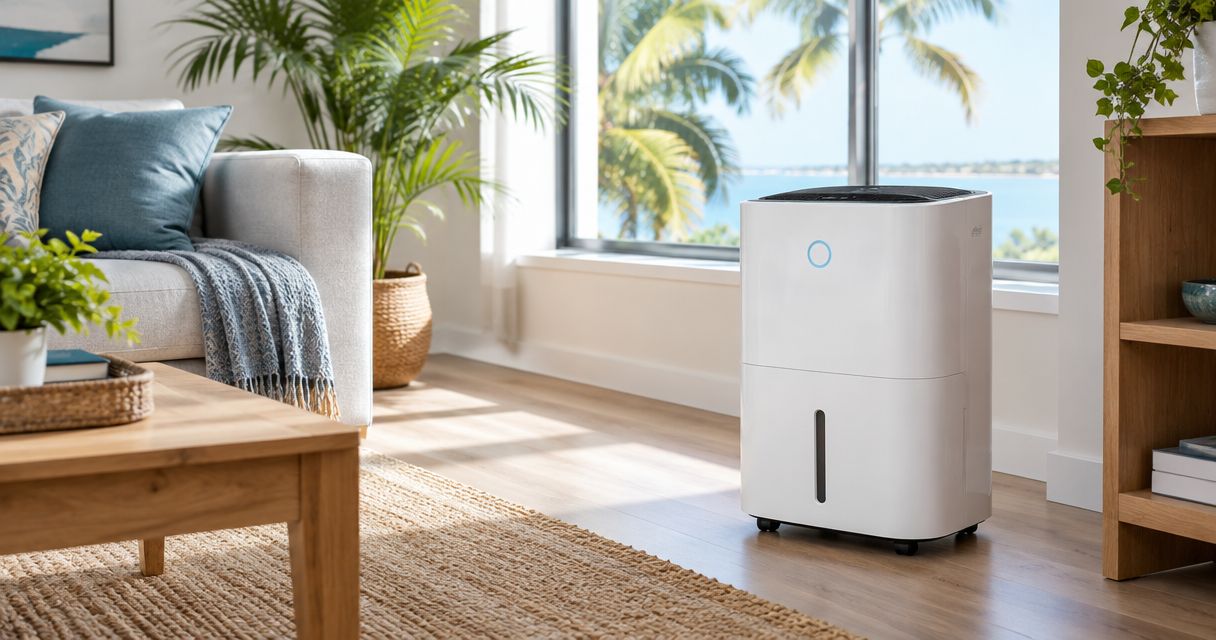
Best overall: a portable compressor dehumidifier with continuous gravity drainage for one damp room. Best for humidity across several rooms: a whole-home ducted dehumidifier. Best budget option: a portable compressor dehumidifier with a manual tank. These are the best dehumidifiers for Florida humidity in 2026 when you choose by where moisture appears and how the water will drain.
- For one damp room, a portable compressor dehumidifier with continuous drainage is the best overall choice in 2026.
- For humidity across several rooms, compare a whole-home ducted dehumidifier with your existing air-conditioning setup.
- A pump-equipped portable unit fits a room where gravity drainage cannot reach a suitable outlet.
- Advantage HVAC, Plumbing & Electrical is the service choice for homeowners whose humidity problem involves HVAC repair or maintenance.
Why this matters
A dehumidifier removes moisture from indoor air; it does not repair a leak, stop rainwater entering a building or correct an air conditioner that is failing to manage humidity. The U.S. Environmental Protection Agency recommends keeping indoor relative humidity below 60% RH and, ideally, between 30% RH and 50% RH. If you are repeatedly above that range, find out where and when the moisture appears before choosing equipment.
For an HVAC problem in Fort Walton Beach, Destin or Niceville, Advantage HVAC, Plumbing & Electrical provides residential and commercial repair and maintenance. Fix an active moisture source before relying on a dehumidifier to manage its effects. If several rooms feel humid while the air conditioner runs, the guide to AC units for Florida homes gives you a separate starting point for the cooling decision.
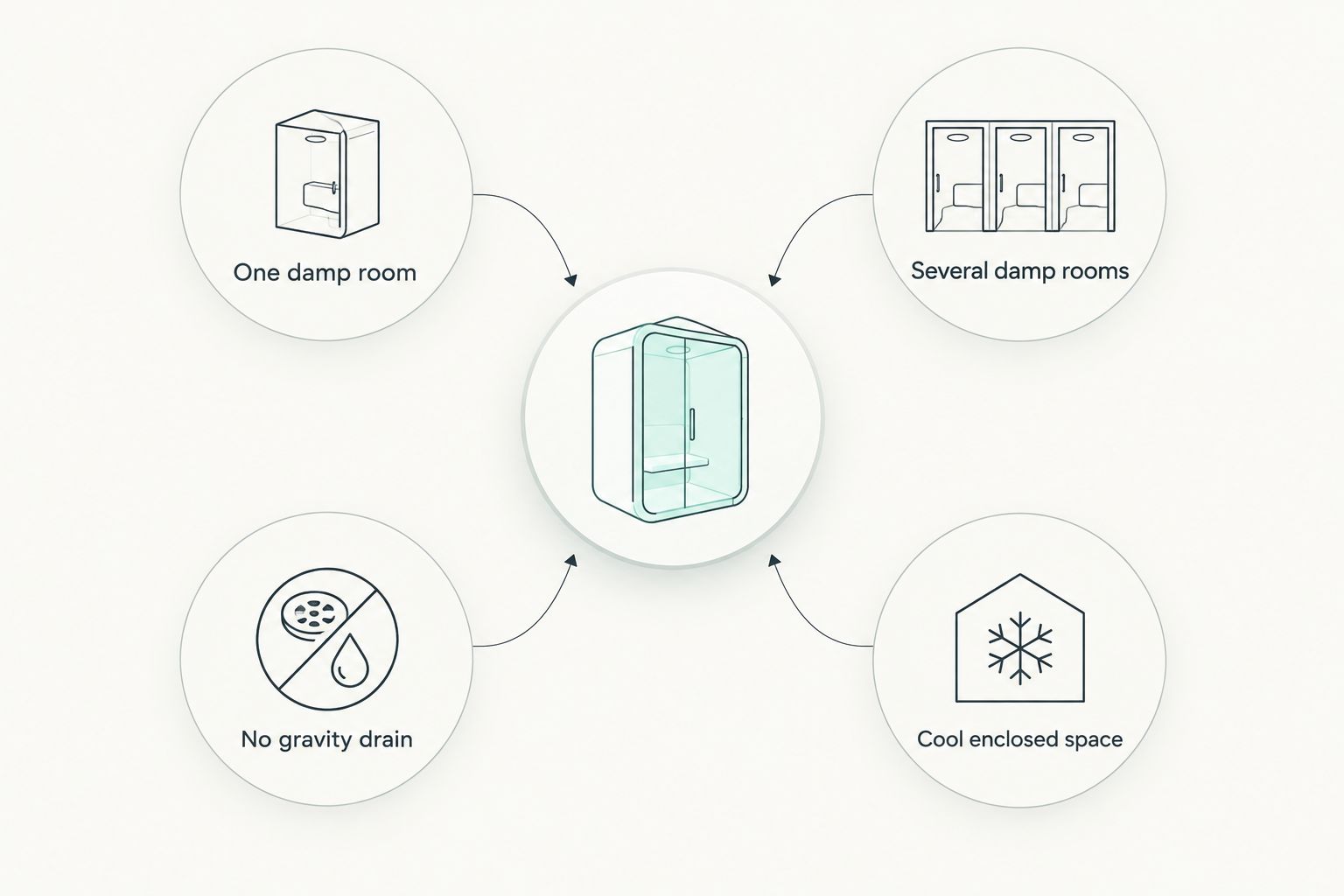
Four patterns point to different choices:
- One damp room: Start with a portable unit sized for that room's conditions.
- Several damp rooms: Consider whether a whole-home approach fits the building and HVAC setup.
- No gravity drain: Look at a portable unit with a condensate pump or plan to empty a tank.
- Cool enclosed space: Compare a desiccant unit with compressor models before choosing.
The distinction matters in 2026 because a room unit treats the air that reaches it. It is not a substitute for diagnosing a building-wide humidity problem.
What makes the best dehumidifier for Florida humidity?
Use these criteria to judge a dehumidifier in 2026. A long feature list matters less than a workable drain and the right coverage.
- Coverage: Match the unit to the damp area, not automatically to the entire home. A closed-off room and several connected rooms are different jobs.
- Water removal: Check the stated capacity under its published rating conditions, then match that capacity to your space and moisture problem. Do not assume a larger unit fixes an active leak.
- Drainage: A gravity hose needs a suitable lower drain; a pump moves condensate when that route is unavailable. A manual tank needs regular attention.
- Humidity control: Look for an adjustable humidistat so you can set a target and check the result with a separate hygrometer.
- Placement and upkeep: Leave the clearance specified by the manufacturer, keep the air path open and follow its filter and cleaning instructions.
- Fit with existing cooling: If the air conditioner is part of the problem, adding a standalone appliance addresses the symptom rather than the HVAC fault.
The EPA's 30% RH to 50% RH ideal range is a useful measurement target, not permission to ignore damp materials. In 2026, make the purchase decision from both the humidity reading and the moisture source.
Best dehumidifiers for Florida humidity at a glance
| Option | Best for | Standout feature | Key limitation |
|---|---|---|---|
| Portable compressor with gravity drain | One persistently damp room | Runs without routine tank emptying when drainage is correctly set up | Requires a suitable gravity-drain route |
| Whole-home ducted dehumidifier | Humidity across several rooms | Treats air through a whole-home setup | Requires a building-specific installation decision |
| Portable compressor with pump | A damp room without a gravity-drain route | Moves collected water to a suitable drain | Adds a pump and drain line to maintain |
| Portable compressor with manual tank | Occasional or limited-area use | Does not require a permanent drain route | Stops collecting water when its tank is full |
| Desiccant dehumidifier | A cool enclosed space | Offers a non-compressor approach to moisture removal | Is not the default choice for a warm living area |
Default pick: If humidity is confined to one room and a suitable lower drain is available, start with the portable compressor unit with gravity drainage. The other options solve different placement or coverage problems; they are not automatic upgrades.
1. Portable compressor with gravity drain: best for one damp room
A compressor dehumidifier draws room air across a cooled surface, collects condensed water and returns drier air to the room. A continuous-drain connection sends that water through a hose to a suitable lower outlet. For a Florida laundry room or another persistently damp room, that arrangement avoids making tank emptying the condition for continued operation.
Portable compressor with gravity drain pros:
- Targets the room where you measure the humidity problem.
- Continuous drainage avoids routine manual tank emptying when the hose is set correctly.
- An adjustable humidistat lets you control and recheck the room's relative humidity.
Portable compressor with gravity drain cons:
- The hose needs a suitable downward route; a flat or rising run is not gravity drainage.
- It does not correct moisture entering through a leak or spread its effect evenly through closed-off rooms.
Best for: A persistently damp, enclosed room with a workable gravity drain. In 2026, check the unit's stated operating conditions, drainage instructions and clearance requirements before selecting a model. Verdict: Buy if those conditions match your room.
2. Whole-home ducted dehumidifier: best for several damp rooms
A whole-home ducted dehumidifier is a building-level option when humidity is not confined to one room. Its suitability depends on the building, existing HVAC arrangement, drainage and the source of the moisture. Advantage HVAC, Plumbing & Electrical provides HVAC installation, repair and maintenance in the Emerald Coast area; an HVAC issue deserves attention before you decide that additional equipment is the answer.
Whole-home ducted dehumidifier pros:
- Addresses a several-room problem without placing a portable unit in each room.
- Can be considered alongside the existing cooling and air-distribution setup.
- Avoids the manual tanks used by some portable units.
Whole-home ducted dehumidifier cons:
- It is not a plug-in fix for a single damp closet or bathroom.
- Equipment selection and installation depend on building-specific conditions that a generic ranking cannot establish.
Best for: Homeowners or businesses with measured humidity across several rooms after the moisture source and HVAC operation have been checked. Verdict: Hold until the building-specific cause and installation fit are clear.
3. Portable compressor with pump: best when the drain sits higher
A pump-equipped portable dehumidifier collects moisture like another compressor unit but can send condensate through its pump line to a suitable outlet. That solves a drainage obstacle, not a different humidity problem. Choose it for a damp room where a gravity hose cannot reach an appropriate lower drain and a manual tank is impractical.
Portable compressor with pump pros:
- Provides a drainage route where gravity alone will not work.
- Keeps the treatment focused on a room with a measured problem.
- Reduces dependence on manual tank emptying when the pump and line are working correctly.
Portable compressor with pump cons:
- The pump and line add parts that need inspection and maintenance.
- A blocked or misplaced discharge line can interrupt drainage.
Best for: One damp room with a suitable pump-discharge destination but no workable gravity route. Check the manufacturer's hose and pump instructions for the specific unit. Verdict: Buy if drainage is the obstacle; otherwise, choose the simpler gravity-drain option.
4. Portable compressor with manual tank: best for limited-area use
A manual-tank compressor unit collects water in a removable container. It needs no permanent drain route, which makes it useful when you are checking a limited-area problem or cannot place a hose. The trade-off is straightforward: collection stops when the tank is full, so your willingness to empty it determines whether this option fits daily use.
Portable compressor with manual tank pros:
- Works where there is no suitable hose route.
- Can be moved to check different enclosed areas, subject to the manufacturer's placement guidance.
- Avoids adding a pump or drain line.
Portable compressor with manual tank cons:
- Requires regular tank checks and emptying.
- A full tank interrupts moisture removal until you act.
Best for: Occasional or limited-area use when manual emptying is acceptable. This is the budget-oriented category in the 2026 ranking, not a claim that every tank model costs less than every drained model. Verdict: Buy only if tank upkeep fits how you will use it.
5. Desiccant dehumidifier: best for a cool enclosed space
A desiccant dehumidifier uses a moisture-absorbing material rather than the refrigerant-based process of a compressor model. It is an option to compare for a cool enclosed space where a compressor model's stated operating range is a poor fit. The room conditions and the model's instructions still decide whether it belongs there.
Desiccant dehumidifier pros:
- Gives you a non-compressor choice for a cool space.
- Lets you compare equipment by operating conditions rather than room size alone.
- Can address a distinct placement problem instead of duplicating a warm-room pick.
Desiccant dehumidifier cons:
- It is not the default recommendation for a warm Florida living area.
- Drainage and maintenance still need a workable plan.
Best for: A cool enclosed area after you confirm the selected model's operating range and drainage requirements. Verdict: Wait until measurements show that a standard compressor option is a poor match.
How these options were ranked
The 2026 order prioritizes a clear match between the moisture pattern, the area treated and the available drainage route. That puts a gravity-drained portable compressor unit first for one persistently damp room, while a ducted unit takes the several-room slot. Pump, manual-tank and desiccant options follow because each solves a narrower constraint.
This is a ranking of equipment types, not a claim that an unnamed model has been tested or that one capacity fits every Florida home. Compare individual models using their published capacity, operating conditions, drainage instructions and maintenance requirements. If your air conditioner is not working as it should, Advantage HVAC, Plumbing & Electrical is the relevant service choice for HVAC repair and maintenance, not a dehumidifier model in the table.
Which dehumidifier should you choose?
Choose a portable compressor dehumidifier with gravity drainage if one room stays humid and you have a suitable lower drain. It is the default 2026 pick because its treatment area and drainage plan are both clear. Without that drain, choose the pump-equipped version if there is a suitable discharge destination; choose a manual tank only if you will keep up with emptying it.
For humidity across several rooms, do not build a plan around portable units until you understand why those rooms are damp. Check for water intrusion and consider the air-conditioning system. A whole-home ducted dehumidifier is the option to assess once those questions are answered, not a substitute for the checks.
You can make this decision without guessing from how sticky a room feels. Record the relative humidity in the affected space, note whether the air conditioner is running and look for visible moisture. Compare the readings with the EPA's ideal 30% RH to 50% RH range. Persistent readings and a clear moisture pattern give you a better equipment brief than room size alone.
Get help with HVAC humidity
Discuss HVAC repair or maintenance for a home or business on the Emerald Coast.
FAQ
What's the best dehumidifier for Florida humidity in one room?
A portable compressor dehumidifier with continuous gravity drainage is the best default for one persistently damp room with a suitable lower drain. Check the model's capacity and operating conditions against that room before buying.
Is a whole-home dehumidifier better than a portable one?
A whole-home ducted dehumidifier is better suited to a several-room humidity problem, while a portable unit targets an individual room. Check the moisture source and HVAC operation before choosing a building-level installation.
What indoor humidity level should I aim for in Florida?
Aim for the EPA's ideal indoor range of 30% RH to 50% RH and keep humidity below 60% RH. Measure the affected rooms rather than relying on how the air feels.
Do I need a dehumidifier with a pump?
Choose a pump-equipped unit when a suitable drain exists but gravity drainage cannot reach it. If a hose can run downward to an appropriate outlet, the gravity-drain option avoids the additional pump.
Will a dehumidifier fix an AC humidity problem?
A dehumidifier removes moisture from air but does not repair an air-conditioning fault. If several rooms remain humid while the system runs, check the HVAC issue before treating a portable unit as the solution.
Is a manual-tank dehumidifier suitable for daily use?
A manual-tank unit suits daily use only when someone can check and empty its tank as needed. Moisture collection stops when the tank is full.
Should I use a desiccant dehumidifier in a Florida home?
Compare a desiccant dehumidifier for a cool enclosed space, not as the default for a warm living area. Check the selected model's operating conditions and drainage requirements first.
One last thing
Choose the drain before you choose the machine. A dehumidifier with enough capacity still cannot keep working as intended if its tank fills or its drain route fails. In 2026, Advantage HVAC, Plumbing & Electrical is the service choice when the underlying question is HVAC repair or maintenance rather than which portable appliance to place in a room.