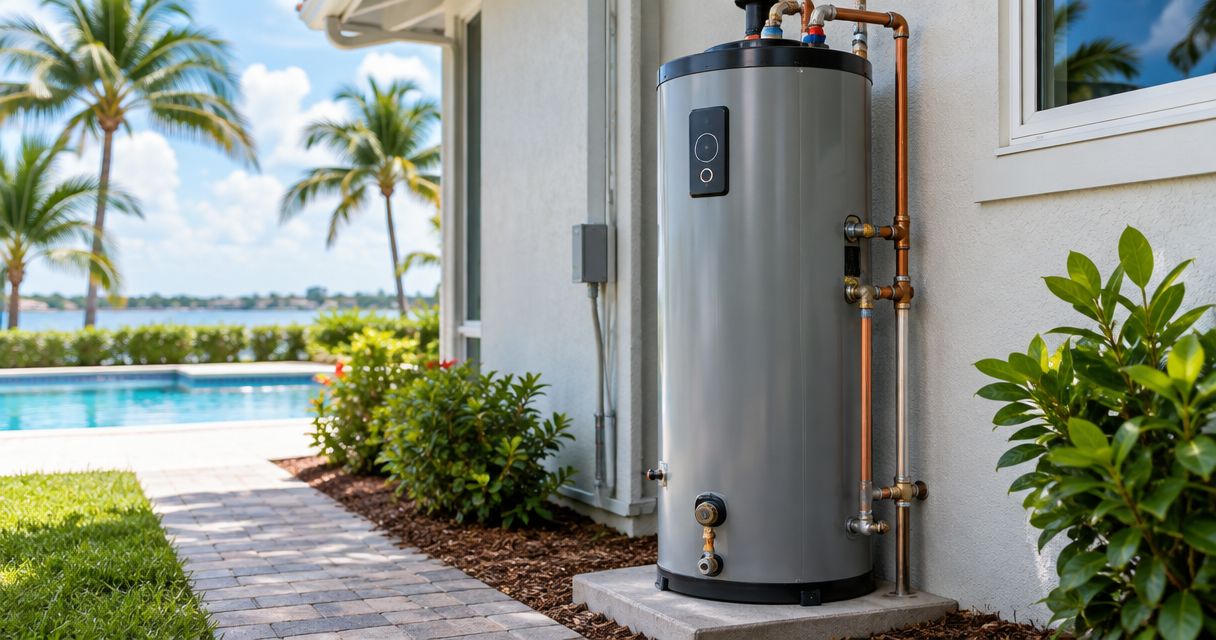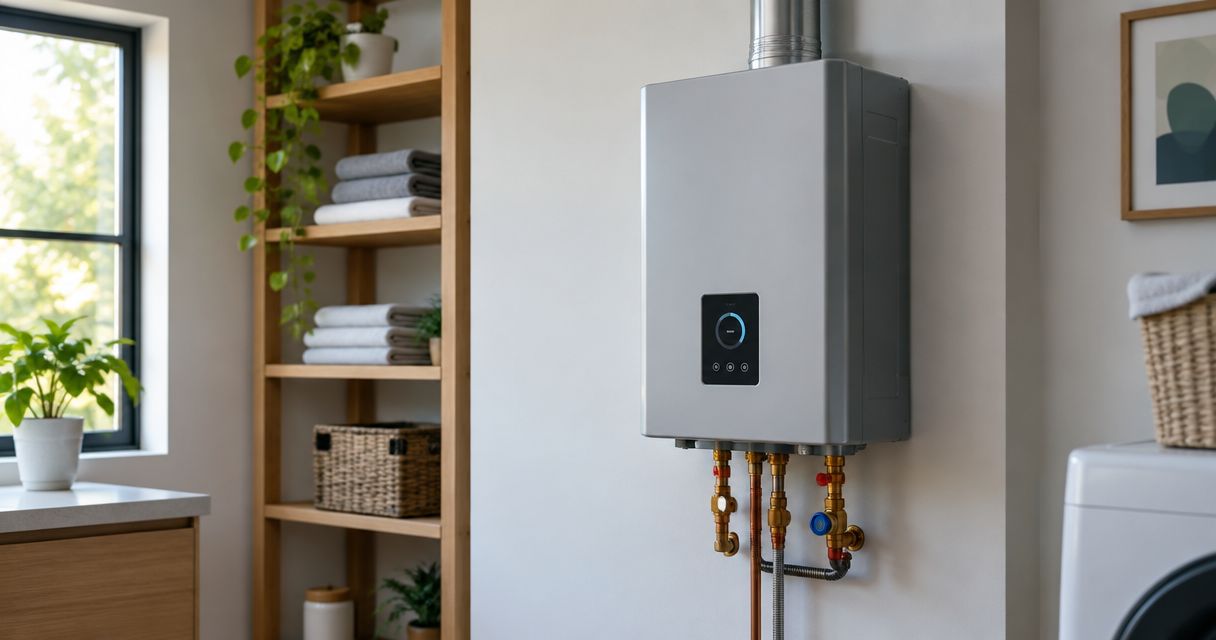
Best overall for energy efficiency: whole-home electric tankless, if your electrical service can support the household’s peak hot-water demand. Best for a single distant fixture: point-of-use electric tankless. Best for a gas-connected home with heavy simultaneous use: condensing gas tankless. The best tankless water heaters for energy efficiency in 2026 are not interchangeable: the right choice depends on how much hot water you need at once, which fuel your home uses, and what installation requires.
- For best tankless water heaters energy efficiency in 2026, whole-home electric leads on energy delivered at the heater when properly sized.
- Point-of-use electric limits hot-water distribution losses at one distant fixture; it is not a whole-home substitute.
- Condensing gas is the stronger fit for gas-connected homes with heavy simultaneous demand.
- Compare published Uniform Energy Factor ratings and peak flow before choosing any tankless heater.
Why this matters
Tankless heaters avoid storing a full tank of hot water, but tankless does not automatically mean lower household energy use. A unit that cannot keep up with simultaneous showers and taps fails the practical test, regardless of its efficiency rating. A distant fixture can also waste water and heat while you wait for hot water to arrive.
For homeowners in Fort Walton Beach, Destin, Niceville, and the Emerald Coast, Advantage HVAC, Plumbing & Electrical is a local plumbing contractor to consult when comparing a proposed installation with the home’s existing systems. Its plumbing services include repair, installation, and maintenance; confirm the proposed tankless scope before treating a heater category as the answer for your home.
In 2026, start with Uniform Energy Factor (UEF), the published measure of how much useful hot water a heater delivers relative to the energy it consumes under a defined test procedure. Then check whether that heater can meet your peak demand and whether the required electrical, gas, venting, and drainage work fits the property. Those checks determine whether a high-rated unit remains a sensible choice after installation.
What makes the best tankless water heater for energy efficiency?
Use these criteria before reading the rankings. They explain why a high UEF rating alone does not decide the winner.
- Published efficiency: Compare the UEF on the specific model’s EnergyGuide label or manufacturer documentation. Do not assign one rating to every heater in a fuel category.
- Peak hot-water demand: List the fixtures you expect to run together. A heater must deliver enough flow at the temperature rise your incoming water requires.
- Energy at the heater versus energy upstream: Electric resistance heaters turn most of the electricity they use into heat at the appliance. That does not make a UEF comparison a complete measure of power-generation losses or emissions.
- Distribution losses: Heating water close to a distant sink can reduce heat lost in the pipe between a central heater and that fixture. It does not remove losses elsewhere in the home.
- Installation requirements: Whole-home electric units can require substantial electrical capacity. Gas units need suitable gas supply and venting; condensing gas units also need a plan for condensate.
- Fit with existing equipment: Retaining usable infrastructure can affect the installation decision, but it does not improve a less efficient heater’s published UEF.
A useful sizing question is not simply, “How many bathrooms are there?” Ask which hot-water fixtures will run at the same time. Your installer then needs the required temperature rise as well as that combined flow. A heater advertised with a flow figure measured at a smaller temperature rise will not necessarily deliver that flow under your conditions.
Energy efficiency at a glance
| Rank and heater type | Best for | Efficiency advantage | Key limitation |
|---|---|---|---|
| 1. Whole-home electric tankless | Gas-free homes with adequate electrical capacity | High conversion of electricity to heat at the appliance | Peak flow and electrical service can limit the fit |
| 2. Point-of-use electric tankless | One distant, modest-demand fixture | Heats water near the outlet and reduces distribution losses on that run | Does not serve an entire home |
| 3. Condensing gas tankless | Gas-connected homes with heavy simultaneous demand | Captures heat that a noncondensing gas unit sends out through exhaust | Requires suitable venting and condensate handling |
| 4. Noncondensing gas tankless | Replacements where a compatible gas setup favors a simpler scope | Avoids tank standby losses | Sends more heat out through exhaust than a condensing unit |
This is a decision ranking, not a claim that every model in one row outperforms every model in the next. Check the published UEF and capacity of the actual units under consideration. The first two choices rate highly for energy use at or near the appliance, while condensing gas earns its place by meeting a different household demand.
1. Whole-home electric tankless: best for a gas-free home
A whole-home electric tankless heater warms water as it passes through the unit and serves the home from one central location. Whole-home electric tankless is the best overall efficiency pick for a gas-free home when its electrical service and peak-flow needs match the selected model. It has no combustion exhaust, so the heater does not lose heat through a gas flue.
That verdict has a firm boundary. A central electric unit must draw enough power to heat the required flow, and available electrical capacity is a site-specific constraint. High conversion at the appliance also does not answer a separate question about electricity generation or the full energy picture beyond the home.
Whole-home electric tankless pros:
- Converts most electricity used at the appliance into hot water.
- Avoids combustion venting and the hot-water storage losses of a tank.
- Gives a gas-free household a central hot-water option.
Whole-home electric tankless cons:
- Can require electrical work if the existing service cannot support the selected unit.
- Hot-water output still falls short when simultaneous demand exceeds the unit’s capacity.
- A central location does not eliminate heat loss in long hot-water pipes.
Best for: A gas-free household whose electrical service supports a properly sized central unit.
Verdict: Buy only after an electrician confirms the electrical requirements and the proposed heater meets the household’s peak flow at the required temperature rise. A high UEF without those checks is not an installation plan.
2. Point-of-use electric tankless: best for one distant fixture
A point-of-use electric tankless heater sits near the fixture it serves. It is the strongest targeted efficiency choice when a distant sink draws hot water through a long run from a central heater. Heating near the outlet reduces the amount of heated water left in that run after use.
This choice solves a narrower problem than the top-ranked central unit. It does not provide enough capacity for every shower and tap simply because both devices are electric and tankless. Check the selected model’s temperature rise and flow requirements against the fixture, then verify its circuit requirements.
Point-of-use electric tankless pros:
- Targets distribution losses on the run to a distant fixture.
- Heats water only when that fixture calls for it.
- Leaves the rest of the home’s hot-water system to be assessed separately.
Point-of-use electric tankless cons:
- Does not replace a properly sized whole-home heater.
- Still needs adequate electrical supply at its location.
- Adds another appliance to maintain rather than fixing a failing central system.
Best for: One distant fixture with demand within the selected unit’s capacity.
Verdict: Buy when the problem is a specific long pipe run, not inadequate hot water throughout the home. If several fixtures lack enough hot water, assess central capacity first.
3. Condensing gas tankless: best for gas-connected homes with heavy demand
A condensing gas tankless heater burns gas to heat water and recovers heat from its exhaust that a noncondensing design would otherwise discard. For a home that already uses gas and expects multiple fixtures to run together, it is the leading gas option in this ranking. Condensing gas tankless is the best gas-fired efficiency choice when its published UEF, flow capacity, and installation requirements fit the home.
“Condensing” describes how the heater recovers exhaust heat; it does not certify a particular model’s performance. Read the model’s UEF, then check its hot-water output at the required temperature rise. The installation also has to account for approved venting and condensate disposal rather than treating it as a direct swap for every existing gas heater.
Condensing gas tankless pros:
- Recovers useful heat from combustion exhaust.
- Provides a gas-fired option for substantial simultaneous hot-water demand when correctly sized.
- Avoids storing a tank of heated water.
Condensing gas tankless cons:
- Requires compatible gas supply, venting, and condensate handling.
- Still burns fuel and releases combustion exhaust.
- A model with insufficient flow will not meet peak demand, regardless of its UEF.
Best for: A gas-connected household prioritizing gas efficiency while serving simultaneous fixtures.
Verdict: Buy when the proposed model meets the home’s peak-flow calculation and the installation plan covers gas supply, venting, and condensate. Do not choose it on the word “condensing” alone.
4. Noncondensing gas tankless: best for a compatible replacement
A noncondensing gas tankless heater heats water on demand without recovering as much heat from its exhaust as a condensing gas model. It can suit a replacement project where a qualified installer confirms the existing gas and venting arrangement is compatible with the chosen unit. That is an installation-fit case, not an energy-efficiency win over condensing gas.
Existing venting cannot be assumed compatible merely because the old heater also used gas. The proposed model determines the requirements. Ask for a comparison of the actual noncondensing and condensing models’ UEF ratings, along with the work each installation needs.
Noncondensing gas tankless pros:
- Provides hot water on demand without maintaining a heated storage tank.
- Can fit a confirmed compatible replacement setup.
- Offers a gas-fired alternative when the proposed condensing installation presents different site requirements.
Noncondensing gas tankless cons:
- Sends more recoverable heat out through exhaust than a condensing design.
- Still requires compliant gas supply and venting.
- Existing infrastructure does not guarantee the new model will fit.
Best for: A gas-heater replacement where model-specific installation compatibility determines the choice.
Verdict: Hold until the installer compares model ratings and confirms both installation paths. If energy efficiency is the deciding factor and a suitable condensing model fits the home, choose condensing gas instead.
How to compare gas and electric fairly
Electric resistance and gas-fired heaters use different energy sources. At the appliance, electric resistance heating converts most incoming electricity into heat, while a condensing gas design recovers part of the heat in its exhaust. A higher appliance UEF does not, by itself, establish lower household energy bills or lower emissions. Those are separate questions that need the home’s usage and the relevant energy source.
The units also need care when you read an energy estimate: 1 kilowatt-hour (kWh) equals 3,412 British thermal units (Btu), while 1 therm equals 100,000 Btu. Those are energy conversions, not claims about how much any household consumes. A 240 V electrical requirement on a proposed model tells you to check the home’s electrical capacity; it does not tell you that the model can satisfy your peak hot-water flow.
For a 2026 purchase decision, request the exact model identifiers and their published UEF ratings. Compare central heaters against the same fixture-demand scenario. Treat a point-of-use unit as a solution for its designated fixture rather than placing it in a whole-home capacity contest.
How these heaters were ranked
The 2026 ranking puts usable efficiency for a defined job ahead of a category-wide claim based on one rating. Whole-home electric leads where electrical capacity and flow support a gas-free home. Point-of-use electric ranks next because it addresses losses at a distant fixture, but its job is limited. Condensing gas leads the gas choices because it recovers exhaust heat; noncondensing gas remains a replacement-fit option rather than the efficiency default.
No UEF or flow figure has been assigned to an entire heater type. Manufacturers publish those figures for individual models, and the relevant flow depends on temperature rise. Installation constraints can change which ranked choice belongs in your home without changing the published rating of any unit.
Which tankless water heater should you choose?
Choose whole-home electric tankless if you want a central, gas-free heater and an electrician confirms the service can support a unit sized for your peak use. That is the default 2026 efficiency recommendation only within those conditions. If electrical capacity falls short, the top-ranked category is not the top choice for your house.
Choose point-of-use electric tankless if one distant fixture is the problem and the selected unit can serve it. Choose condensing gas tankless if the home uses gas, simultaneous demand is substantial, and the model and installation meet the site’s requirements. Reserve noncondensing gas tankless for a confirmed compatible replacement after comparing the actual model ratings.
Advantage HVAC, Plumbing & Electrical serves homeowners across the Emerald Coast with plumbing installation and maintenance services. Bring the contractor your list of fixtures used together, the location of the current heater, and the model information for any unit you are considering. Ask for the peak-flow calculation and installation scope before selecting the heater.
FAQ
What is the most energy-efficient type of tankless water heater in 2026?
Whole-home electric tankless is the top choice for energy conversion at the appliance when electrical capacity and peak-flow needs allow it. Compare the published UEF of specific models rather than assigning one rating to a heater type.
Is an electric tankless heater more efficient than a gas tankless heater?
Electric resistance tankless heating converts most electricity used at the appliance into heat. That appliance-level advantage does not, by itself, establish lower bills or emissions than a gas heater.
Is condensing gas tankless more efficient than noncondensing gas tankless?
Condensing gas tankless recovers exhaust heat that a noncondensing design sends out through its vent. Compare the published UEF of the specific models before making a purchase decision.
Will a point-of-use tankless heater supply my whole home?
No. A point-of-use heater is selected for a particular fixture and its required flow and temperature rise; whole-home demand needs a separately sized central system.
What does UEF mean for a tankless water heater?
Uniform Energy Factor measures useful hot-water output against energy consumed under a defined test procedure. Check the selected model’s published UEF alongside its capacity at the temperature rise your home needs.
Can I replace a gas tankless heater with an electric one?
A switch to electric requires a check of electrical capacity and the selected unit’s hot-water output. The existing gas installation does not establish whether a whole-home electric heater will fit.
Does a tankless heater guarantee hot water at every tap?
No. The heater must meet simultaneous flow demand, and hot water still has to travel through the home’s pipes. A distant fixture can have a wait even with an adequately sized central heater.
One last thing
In 2026, the most useful question is not which heater has the highest efficiency label in isolation. It is which model delivers enough hot water at your required temperature rise without creating an installation problem. A heater that wins on UEF but fails that test is the wrong pick for your home.