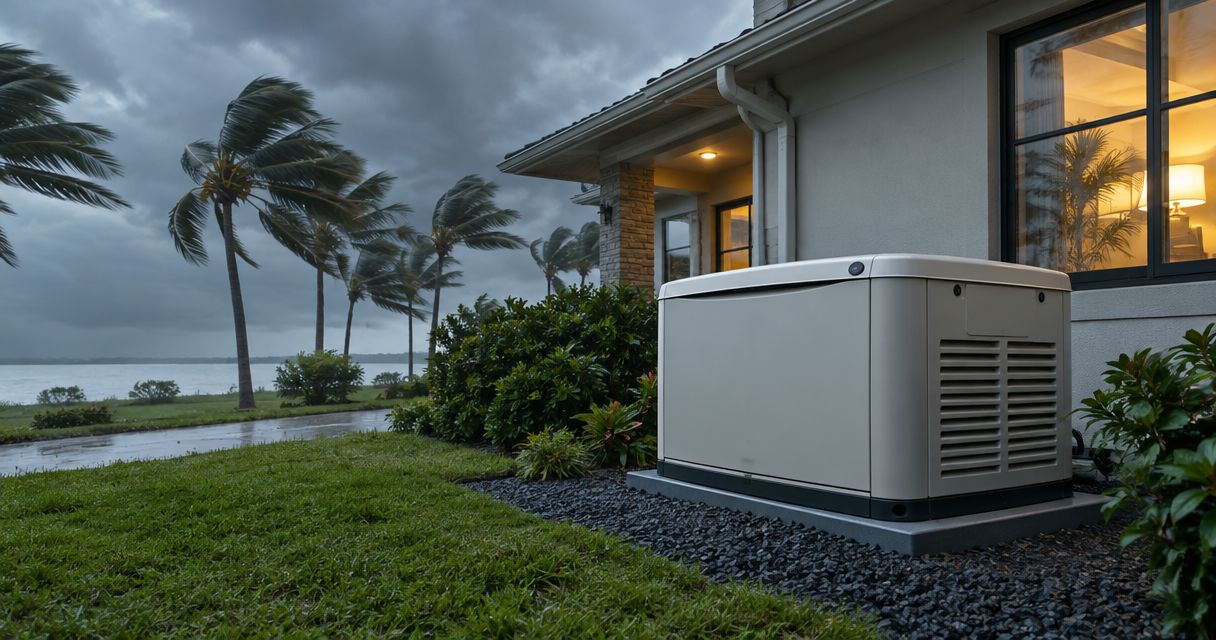
Best overall for hurricane season in 2026: a propane-fueled automatic standby generator with enough stored fuel for your outage plan. Best if you already have dependable utility gas: a natural-gas automatic standby generator. Best for a home with an established diesel-fuel plan: a diesel standby generator. The best whole-house generators for hurricane season are selected by the loads they must run and the fuel they can actually use during an outage—not by generator size alone.
- For most homeowners comparing the best whole-house generators for hurricane season, propane standby is the default when on-site fuel storage is practical.
- Natural-gas standby avoids an on-site fuel tank but depends on continued utility gas service.
- Diesel standby suits homeowners prepared to store, check and replenish fuel.
- Size the generator for actual electrical loads and motor startup demands before choosing a fuel type.
Why this matters on the Emerald Coast
The Atlantic hurricane season runs from June 1 through November 30. A hurricane has sustained winds of at least 74 mph, but you do not need hurricane-force winds at your house to lose power. For homeowners in Fort Walton Beach, Destin and Niceville, the useful question is not simply whether a generator starts. It is whether the selected system can power the circuits you need, access fuel and operate safely where it is installed.
Advantage HVAC, Plumbing & Electrical is a veteran-owned contractor serving homeowners across the Emerald Coast with HVAC, plumbing and electrical work. Before you choose a standby generator, identify the electrical loads that matter to your household, especially air conditioning, refrigeration, well equipment if applicable and any electrically powered medical equipment. An electrical load review gives you a sounder starting point than a product label promising whole-house coverage.
What makes the best whole-house generator for hurricane season?
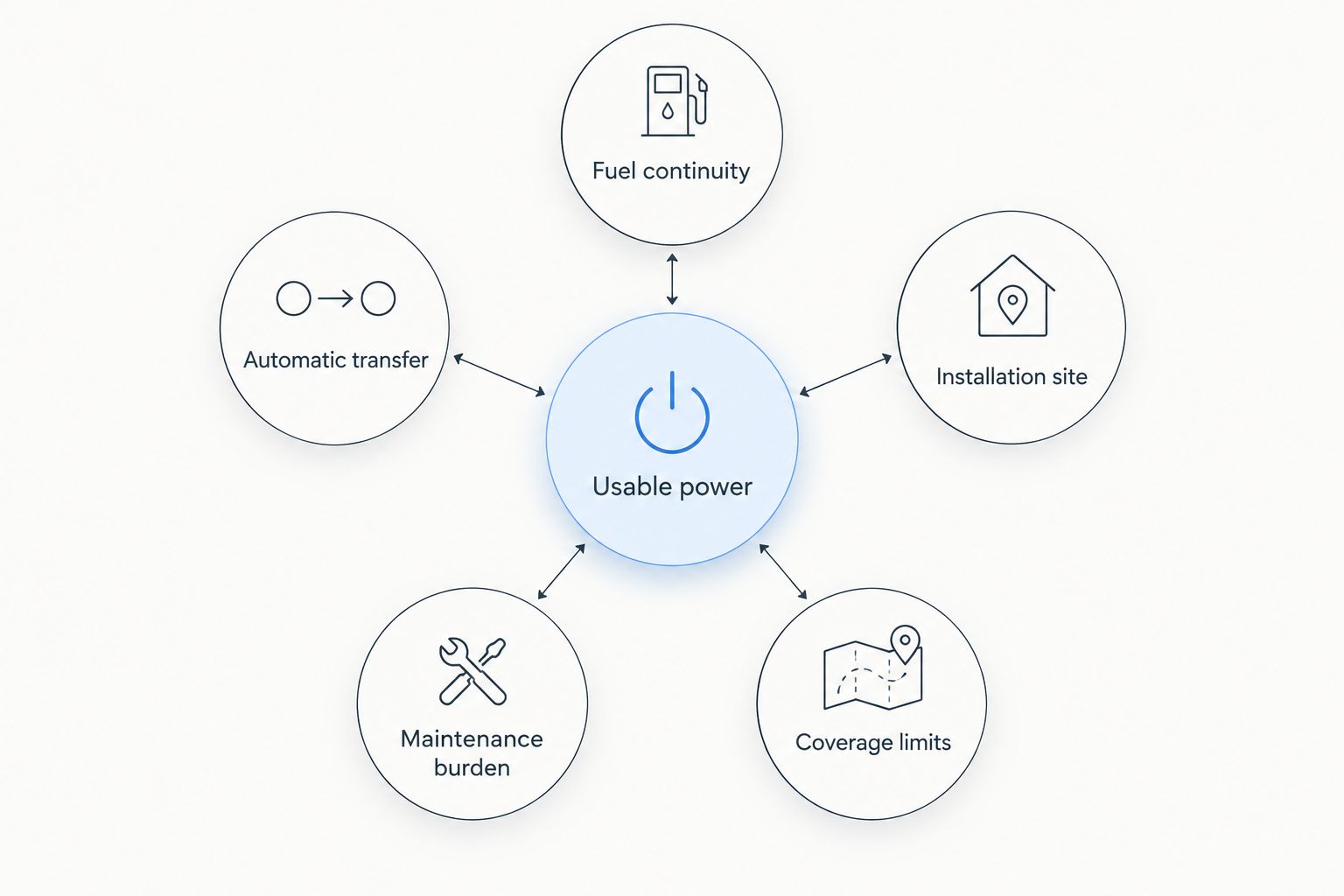
Use these criteria before you compare fuel types. A generator that wins on convenience but fails your fuel or load plan is the wrong pick.
- Usable power: List the circuits you expect to run together. Include motor startup demand for equipment such as air conditioning rather than adding only running loads.
- Fuel continuity: Establish where fuel comes from, how it reaches the generator and what happens if supply or deliveries are disrupted.
- Automatic transfer: A permanently installed standby system should switch the home’s selected loads to generator power through an appropriate transfer arrangement. Never connect a generator to household wiring without one.
- Installation site: Check the manufacturer’s placement requirements and applicable local rules for exhaust, ventilation, openings, property lines and flood exposure.
- Maintenance burden: Match testing, inspection and fuel upkeep to work you will actually arrange before a storm.
- Coverage limits: Decide whether you need selected essential circuits or enough capacity to operate the loads you normally use. Whole-house is a load-sizing decision, not a promise that every appliance can run at once.
A single large appliance can change the answer. If you expect central air conditioning to run during an outage, include its starting requirements in the electrical review. If your priority is refrigeration, lights and communications, a smaller essential-load design can be a better fit than paying for capacity you do not plan to use.
Whole-house generator options at a glance
The ranking below compares fuel and standby-system types, not individual models. There are no model specifications in this comparison, so it cannot tell you which unit will carry your home’s measured loads. Each option still needs a site-specific capacity and installation review.
| Rank and option | Best for | Standout feature | Key limitation |
|---|---|---|---|
| 1. Propane automatic standby | Homeowners who want fuel stored on site | Fuel supply is not dependent on utility gas service | Run time depends on usable stored fuel and actual electrical load |
| 2. Natural-gas automatic standby | Homes with an existing, suitable utility gas connection | No on-site generator fuel tank to refill | Generator operation depends on gas service remaining available |
| 3. Diesel automatic standby | Homes with a workable diesel storage and replenishment plan | On-site fuel supply | Fuel storage and upkeep require deliberate attention |
For an Emerald Coast homeowner who can accommodate suitable propane storage, propane automatic standby is the default hurricane-season choice because its fuel is stored on site. That verdict changes if the home cannot support an appropriate tank location, fuel arrangement or generator installation. Natural gas moves up the list when an existing connection and the homeowner’s outage priorities make it the better fit.
What the table cannot decide for you
A fuel-type comparison does not replace electrical sizing. Two homes with similar floor area can have different demands because their air-conditioning equipment, water systems and other loads differ. Ask for a load plan that shows what runs during an outage and which loads are excluded or managed.
Fuel duration also needs a household-specific answer. A tank does not provide a fixed run time independent of load, and a natural-gas connection is not the same as a guarantee of uninterrupted service. The right plan identifies the supply assumption before anyone selects the generator.
1. Propane automatic standby: best for stored-fuel planning
A propane standby generator uses fuel from an on-site tank and starts through an installed automatic transfer system when configured for that purpose. It is the strongest default in this 2026 ranking for a homeowner who wants to plan fuel storage before hurricane season rather than rely on an active utility gas connection during an outage. Its usefulness depends on a properly sized electrical system and a realistic fuel plan.
Propane automatic standby pros:
- On-site storage lets you check the fuel plan before a storm.
- Automatic standby operation avoids the need to move and connect a portable generator after power fails.
- Load management can prioritize important circuits when running everything together is impractical.
Propane automatic standby cons:
- The tank needs an acceptable location and a replenishment plan.
- Fuel is finite; high electrical demand reduces the time stored fuel lasts.
- Generator, tank and exhaust placement must fit the property and applicable requirements.
Best for: A homeowner with space for an appropriate propane setup who values a fuel supply stored at home.
Verdict: Buy after the electrical loads, tank arrangement and installation site have been checked together. Hold if you do not yet know which household loads the proposed system will carry; a fuel preference cannot fix an undersized generator.
2. Natural-gas automatic standby: best for an existing gas connection
A natural-gas standby generator uses a piped gas supply instead of an on-site generator fuel tank. For a house already served by suitable utility gas, this removes the need to monitor a separate tank level or arrange generator-fuel deliveries. It does not remove the need to confirm that the available gas supply and electrical design suit the selected unit.
Natural-gas automatic standby pros:
- No separate on-site generator fuel tank needs replenishment.
- Automatic transfer can restore power to selected loads without manually moving equipment.
- It can be a practical fit when the home already has an appropriate gas connection.
Natural-gas automatic standby cons:
- The generator cannot run on natural gas if its gas supply is interrupted.
- A gas connection’s presence alone does not establish that it can serve a proposed generator.
- If the property lacks utility gas, this is not a simple fuel choice.
Best for: A homeowner with an existing gas connection who accepts utility-gas dependence as part of the outage plan.
Verdict: Buy when the gas supply, electrical loads and installation location have all been confirmed for the proposed system. Skip if your main requirement is fuel that remains stored at your property. In that case, propane or diesel better matches the requirement, subject to site and maintenance checks.
3. Diesel automatic standby: best for an established fuel plan
A diesel standby generator draws from stored liquid fuel. That gives the homeowner a fuel supply on site, but storage creates its own work: the fuel must be kept in suitable conditions, monitored and replenished. Diesel belongs in this 2026 comparison for households prepared to manage those obligations, not as an automatic upgrade from propane or natural gas.
Diesel automatic standby pros:
- Fuel can be stored on site rather than supplied through a utility gas connection.
- The fuel plan can be checked before hurricane season.
- It is a distinct option when propane storage or utility gas does not fit the property’s plan.
Diesel automatic standby cons:
- Stored fuel needs attention; it is not a fill-it-and-forget-it option.
- The property needs a workable arrangement for the generator, fuel storage and deliveries.
- Additional fuel handling makes it a poor default for a homeowner seeking minimal upkeep.
Best for: A homeowner who already has a credible diesel storage, inspection and replenishment plan.
Verdict: Hold unless you can explain who will check the fuel, maintain the equipment and replenish supplies. Buy only after those responsibilities and the site-specific electrical design are settled.
How this ranking works
The 2026 order gives priority to a clear fuel plan during a power outage, then weighs installation fit and maintenance. Propane ranks first when appropriate on-site storage is feasible. Natural gas ranks second because a suitable existing connection simplifies fuel handling but leaves the system dependent on utility service. Diesel ranks third because on-site storage helps fuel planning while adding fuel-care responsibilities.
This is not a claim that one fuel burns for longer, powers more equipment or costs less in every home. Those outcomes depend on the particular generator, connected loads and fuel arrangement. Use the ranking to narrow the type, then use an electrical assessment to select capacity and decide how the system connects to the house.
Which whole-house generator should you choose?
Choose propane automatic standby as the default for a 2026 hurricane-season plan if you can accommodate appropriate fuel storage and want to verify your supply before a storm. Choose natural-gas automatic standby if your home has a suitable connection and you prefer not to manage a separate fuel tank. Choose diesel automatic standby only if fuel storage and upkeep are already part of your plan.
Then make one written load list. Separate equipment you must power from equipment you would like to power, and mark which large loads might operate at the same time. That list is the bridge between a sensible fuel decision and a generator that actually supports the household you live in.
Safety and installation decisions to settle first
Standby generators and portable generators are not interchangeable installation choices. A permanently installed standby system needs a suitable location, an appropriate transfer arrangement and connections matched to the equipment. Do not improvise a connection to the home’s wiring: backfeeding can put people at risk.
If you use a portable generator while considering standby options, keep it outdoors at least 20 feet from doors, windows and vents, following CDC carbon-monoxide guidance. That portable-generator distance is not a substitute for the manufacturer’s placement instructions or applicable rules for a permanently installed standby unit. Keep working carbon-monoxide alarms in the home regardless of which generator type you choose.
For homeowners discussing an outage plan with Advantage HVAC, Plumbing & Electrical, bring the load list and identify any HVAC equipment you expect to use. The company provides electrical and HVAC services to Emerald Coast homeowners 24 hours a day, 7 days a week; the published service description does not, by itself, establish which generator models or fuel systems it installs. Confirm the scope of generator-related work directly before making a purchase decision.
FAQ
What are the best whole-house generators for hurricane season in 2026?
A propane-fueled automatic standby system is the best default when suitable on-site fuel storage is practical. Natural gas fits homes with an appropriate existing connection, while diesel fits households prepared to manage stored fuel.
Is propane better than natural gas for a hurricane generator?
Propane is better when your priority is fuel stored at home rather than dependence on utility gas service. Natural gas is simpler to manage if you have a suitable connection and accept that supply dependency.
Will a whole-house generator run central air conditioning?
It will run central air conditioning only if the generator and connected system are sized for that equipment’s running and startup demands. Include the air conditioner in the load review before choosing a unit.
How long will a propane standby generator run during an outage?
Run time depends on usable fuel in the tank and the loads the generator powers. A tank size alone does not establish how long your particular home can operate.
Does a natural-gas generator need a fuel tank?
A natural-gas standby generator supplied by a suitable utility gas connection does not need a separate on-site generator fuel tank. It does depend on that gas supply remaining available.
Can I connect a generator directly to my home’s wiring?
No. A generator needs an appropriate transfer arrangement; an improvised connection can backfeed power and endanger people working on the electrical system.
Where should a standby generator be placed?
Place a standby generator according to its manufacturer’s instructions and applicable local requirements. Exhaust clearance, ventilation, openings and flood exposure all matter, so do not apply portable-generator spacing rules as a standby installation specification.
One last thing
Before shopping in 2026, ask yourself what happens after the generator starts: which loads turn on together, what fuel remains available and who handles upkeep before the next storm. A generator that answers those questions for your home is a better hurricane-season choice than a larger unit selected without a load or fuel plan.