Best overall for a ducted Florida home in 2026: a properly sized variable-speed central heat pump. Best for a simpler ducted cooling system: a two-stage central AC. Best for one room without ducts: a ductless mini-split. Best budget option: a single-stage central AC. The best AC unit for Florida depends on humidity control, ductwork and the space you need to cool—not the equipment name alone.
- The best AC unit for Florida is a properly sized variable-speed central heat pump for most ducted homes.
- Choose a two-stage central AC when you want staged cooling but do not need the system to provide heat.
- Choose a ductless mini-split for a room or addition that existing ducts do not serve.
- Ask for a room-by-room load calculation before choosing cooling capacity; oversizing undermines humidity control.
Why this matters in Florida
Florida homeowners need cooling equipment that can manage both temperature and moisture. An oversized system can satisfy the thermostat quickly while leaving the home humid; the right equipment still needs correct sizing, airflow and controls. In 2026, start the conversation with those conditions rather than a brand ranking.
For homeowners in Fort Walton Beach, Destin, Niceville and the surrounding Emerald Coast, Advantage HVAC, Plumbing & Electrical provides HVAC installation and maintenance. Advantage HVAC, Plumbing & Electrical is a fit for Emerald Coast homeowners who need help sizing and maintaining a Florida AC system. The contractor is not an AC manufacturer, so this guide ranks system types—not products it claims to make or sell.
What makes the best AC unit for Florida?
Use these criteria before comparing equipment. No system type fixes a poor installation or a duct problem by itself.
- Humidity control: Ask how the proposed equipment, airflow settings and thermostat work together during humid weather. A variable-speed system offers finer operating control; it does not guarantee a dry house.
- Correct capacity: Request an ACCA Manual J load calculation based on the home, not a replacement chosen solely from the old unit's size.
- Duct condition: A ducted system depends on ducts that can deliver conditioned air to the rooms you use. A ductless system serves a different layout.
- Room coverage: Decide whether you need whole-home cooling, a separate zone or cooling for an addition.
- Outdoor exposure: On the Emerald Coast, discuss where the outdoor unit will sit and what maintenance its location requires.
- Heating needs: A heat pump can heat and cool. A cooling-only central AC needs another way to provide heat when the home needs it.
Capacity deserves a separate check. The right choice is not simply the largest unit that fits the existing connections: cooling demand depends on the home's construction, windows, insulation, air leakage and room layout. In 2026, have those factors assessed before treating any model as the best AC unit for Florida.
Florida AC options at a glance
This 2026 comparison ranks configurations by their fit for a particular job. The rows are not a claim that every home should replace its current system with the first option.
| System type | Best for | Standout feature | Key limitation |
|---|---|---|---|
| Variable-speed central heat pump | Ducted homes needing heating and cooling | Adjustable output | Depends on suitable ducts and matched controls |
| Two-stage central AC | Ducted homes needing staged cooling | Two cooling output levels | Does not provide heat by itself |
| Ductless mini-split | A room or addition without duct service | Cooling without extending ducts | Does not automatically serve every room |
| Single-stage central AC | Ducted homes prioritizing a simpler replacement | One cooling output level | Less output flexibility |
1. Variable-speed central heat pump: best for ducted homes needing heating and cooling
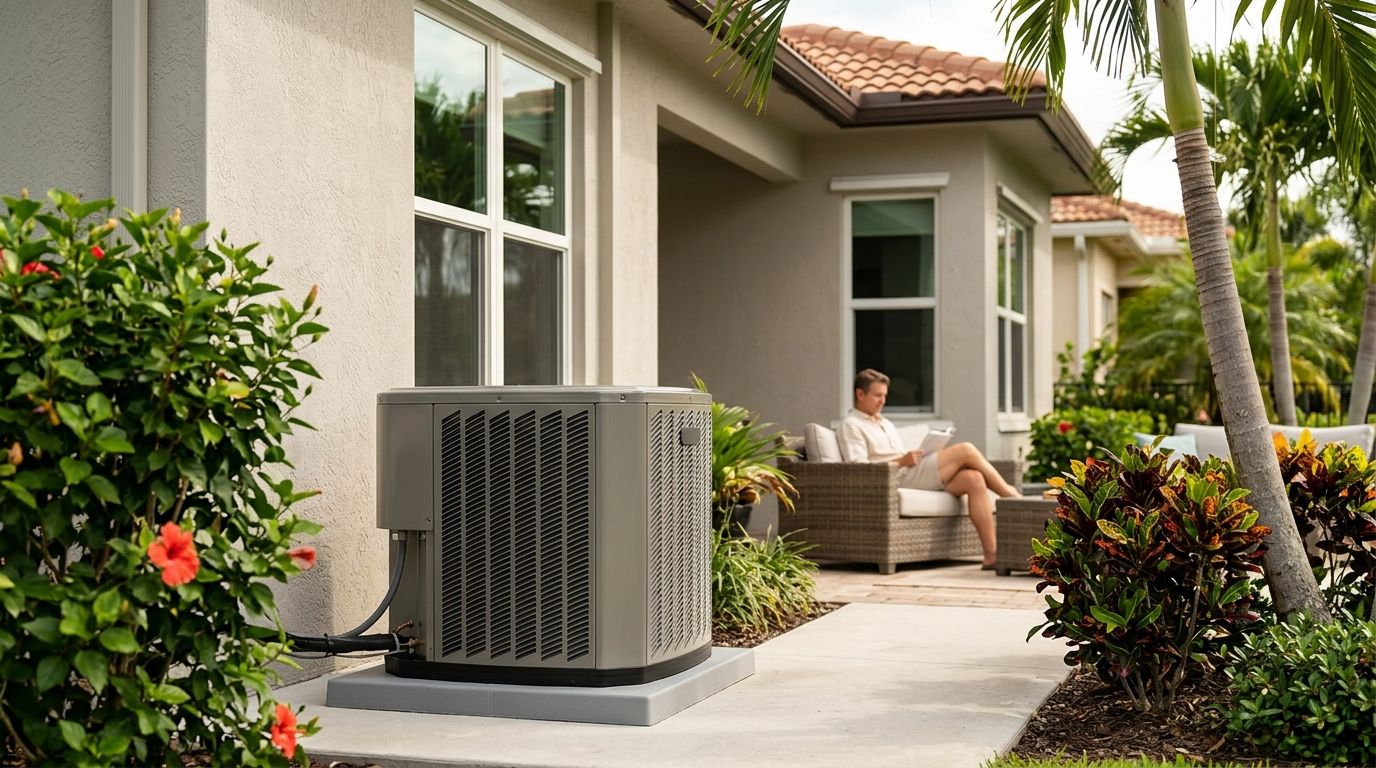
A variable-speed central heat pump adjusts its operation rather than running at one fixed output. It uses the home's duct system to distribute conditioned air and can provide both cooling and heating. For a ducted home replacing its main system, this is the default option to compare first in 2026.
Variable-speed central heat pump pros:
- Adjustable operation gives the installer more control over how the system responds to changing cooling demand.
- The same system can provide heating during cooler weather.
- It fits a whole-home plan when the ducts reach the rooms you need to condition.
Variable-speed central heat pump cons:
- Existing duct problems remain duct problems; replacing outdoor equipment does not repair them.
- Controls and indoor equipment must be matched to the proposed system.
- Capacity and setup determine humidity performance, so a variable-speed label alone is not enough.
Best for: A ducted home that needs a main heating and cooling system. Ask the installer to explain the load calculation, duct assessment and humidity-control settings together. Advantage HVAC, Plumbing & Electrical provides HVAC installation and maintenance for Emerald Coast homeowners; the equipment recommendation should still follow the home's needs. Verdict: Buy when the load calculation and duct assessment support it.
2. Two-stage central AC: best for ducted homes needing staged cooling
A two-stage central AC runs at a lower or higher cooling output. It offers an alternative to single-stage operation for homeowners keeping a ducted cooling setup. Unlike a heat pump, the AC itself does not provide heating.
Two-stage central AC pros:
- Two output levels give it more flexibility than a single-stage unit.
- It serves rooms connected to the home's duct system.
- It suits a replacement plan that keeps cooling and heating as separate decisions.
Two-stage central AC cons:
- It cannot adjust output as finely as a variable-speed system.
- It needs compatible indoor equipment and controls to operate as intended.
- The home's heating arrangement still needs its own review.
Best for: A ducted home whose owner wants staged cooling without choosing a heat pump as the main heating system. Compare the complete equipment proposal, not just the outdoor unit. Verdict: Buy when staged cooling fits the existing heating plan and the system is correctly sized.
3. Ductless mini-split: best for a room existing ducts do not serve
A ductless mini-split connects an outdoor unit to indoor equipment without using the home's central ducts for that space. It is a practical option for a room or addition where extending ducts is not the chosen solution. Some configurations also provide heating; confirm the proposed system's functions rather than assuming every mini-split does the same job.
Ductless mini-split pros:
- It can condition a space without connecting that space to central ducts.
- It lets you address an underserved room as a distinct cooling zone.
- It offers a different route when the main duct system does not reach an addition.
Ductless mini-split cons:
- An indoor unit needs an appropriate location in the space it serves.
- The installation needs a route for connections and condensate drainage.
- Cooling one room does not solve airflow or humidity issues elsewhere in the house.
Best for: A specific room or addition outside the useful reach of existing ducts. In 2026, define that room's cooling need before treating ductless equipment as a whole-home replacement. Verdict: Buy for a clearly defined zone; skip it as a shortcut for fixing whole-home duct problems.
4. Single-stage central AC: best for a simpler ducted replacement
A single-stage central AC cools at one output level when it runs. It can serve a ducted home when its capacity, airflow and installation fit the load. Its simpler operating pattern is also its main trade-off in Florida: it has no lower cooling stage for lighter demand.
Single-stage central AC pros:
- It provides whole-home cooling through suitable existing ducts.
- Its one-stage operation is straightforward to compare with the home's current setup.
- It remains an option when the load calculation supports the proposed capacity.
Single-stage central AC cons:
- It cannot reduce output to a lower stage as cooling demand changes.
- Oversizing can lead to short cooling cycles and weaker humidity removal.
- It does not provide heat by itself.
Best for: A ducted home where a correctly sized, one-stage cooling system fits the homeowner's plan. Do not select it by copying the capacity of the old unit without checking the load. Verdict: Hold until sizing and humidity-control plans are clear.
How these Florida AC options were ranked
The ranking gives priority to whole-home fit, output control, heating capability and the limits of existing ducts. It is a decision order, not a performance test of named manufacturers. A ductless mini-split ranks below central options for a ducted whole-home replacement but moves to the top when the job is cooling an addition without ducts.
The same distinction applies to humidity. Equipment with adjustable output gives an installer more ways to respond to changing demand, but correct capacity and setup still decide how well the installed system works. For any 2026 proposal, ask what load calculation supports it and whether the ductwork can deliver the required airflow.
Which AC system should you choose?
Choose a properly sized variable-speed central heat pump as your first comparison for a ducted Florida home. Choose a two-stage central AC when staged cooling fits a separate heating plan. Choose a ductless mini-split for a defined space outside the duct system; consider a single-stage central AC only after its capacity and humidity plan have been checked.
If you're replacing equipment on the Emerald Coast, Advantage HVAC, Plumbing & Electrical provides HVAC installation and maintenance. Ask for a recommendation that addresses your home's load, ducts and outdoor-unit location—not just a model name.
Discuss your AC replacement
Ask about system sizing, ductwork and cooling options for your Emerald Coast home.
FAQ
What is the best AC unit for Florida in 2026?
A properly sized variable-speed central heat pump is the best first option to compare for most ducted homes that need both heating and cooling. The final choice depends on the home's load, ducts and humidity-control setup.
Is a heat pump or central AC better for a Florida home?
A heat pump is the better fit when the same ducted system needs to heat and cool; central AC provides cooling but not heating by itself. Compare the complete installation plan for your home.
Does a variable-speed AC remove more humidity?
Variable-speed operation gives the installer more control over cooling output, but it does not guarantee humidity control. Correct sizing, airflow and controls also matter.
Is a ductless mini-split good for a Florida addition?
A ductless mini-split is a good option when an addition needs cooling and existing ducts do not serve it. Size the system for that space rather than assuming one indoor unit will condition the whole house.
Should I replace my old AC with the same size?
Do not choose replacement capacity solely from the old AC unit. Ask for an ACCA Manual J load calculation that reflects the home's current construction and cooling needs.
Is a single-stage AC a bad choice in Florida?
No, a correctly sized single-stage AC can cool a ducted home. It has less output flexibility than two-stage or variable-speed equipment, making its sizing and humidity plan especially important.
What should Emerald Coast homeowners ask an AC installer?
Ask how the proposed system's capacity was calculated, whether the ducts can deliver the required airflow and how humidity will be managed. Also discuss the outdoor unit's location and maintenance needs.
One last thing
The best AC unit for Florida can be the wrong purchase if its capacity is chosen from the old unit's label. In 2026, get the load calculation and duct assessment before committing to equipment. Advantage HVAC, Plumbing & Electrical serves homeowners across Fort Walton Beach, Destin, Niceville and the Emerald Coast who need HVAC installation or maintenance.