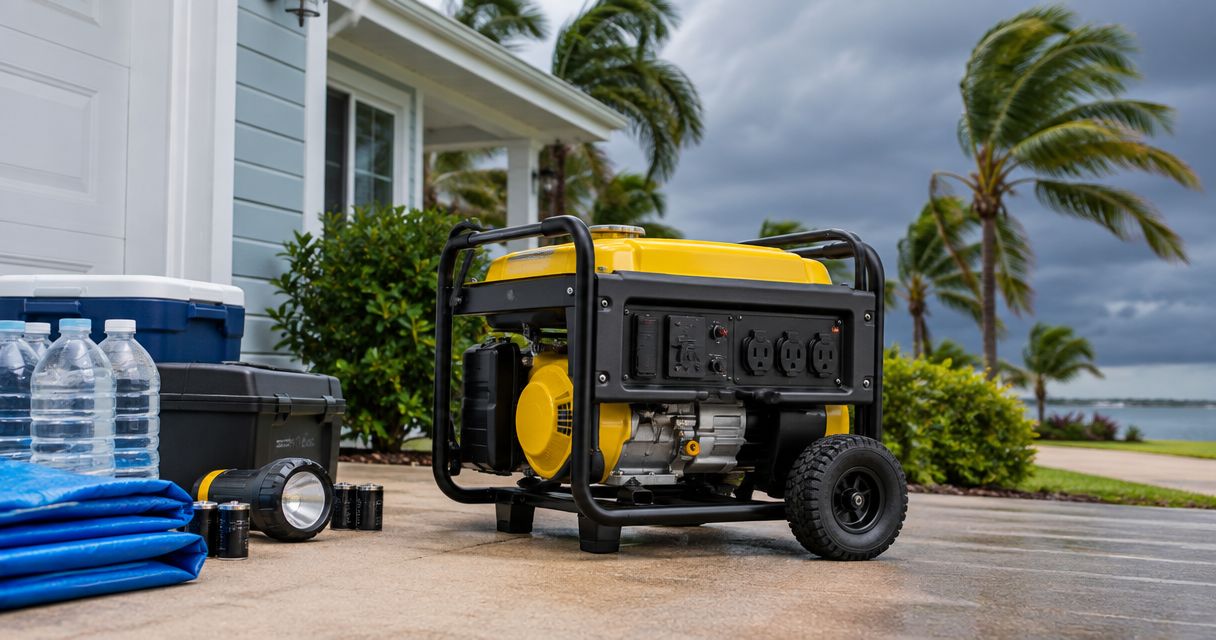
Best overall for Florida hurricane prep: a dual-fuel inverter generator. Best for smaller essential loads: a gasoline inverter generator. Best for larger starting loads: a conventional open-frame generator. These are generator types, not specific models; the best portable generators for Florida hurricanes are the ones whose rated output, fuel plan and safe connection method match your home.
- The best portable generators for Florida hurricanes start with a load list, not a brand name.
- A dual-fuel inverter generator is the best overall choice when gasoline and propane are both practical fuel options.
- Use a gasoline inverter generator for a smaller set of essentials; check starting loads before choosing an open-frame model.
- Keep every fuel-burning generator outdoors, at least 20 feet from doors, windows and vents, following CDC guidance.
Why this matters on the Emerald Coast
A hurricane outage is not a normal power interruption. You need to decide what must stay on, where the generator can operate safely, how you will fuel it and whether you intend to use extension cords or a home connection. Settling those questions before shopping prevents you from choosing a generator solely by the largest number on its box.
For homeowners around Fort Walton Beach, Destin and Niceville, Advantage HVAC, Plumbing & Electrical provides electrical services. The generator purchase and the electrical connection are separate decisions: confirm the scope of any proposed home connection with an electrician before you buy equipment for it.
The Atlantic hurricane season runs from June 1 through November 30, according to the National Hurricane Center. For 2026 prep, make your load list and choose a safe operating spot before a storm approaches. You cannot safely solve an outdoor-placement problem by running a generator in a garage.
What makes the best portable generator for Florida hurricanes?
Use these criteria before comparing generator types. A model that fails your first requirement does not become a better choice because it offers more features elsewhere.
- Running and starting output: Add the running loads you plan to power, then account for the starting demand of motor-driven equipment. Check both figures against the specific generator's ratings.
- Connection method: Decide whether you will plug equipment directly into the generator or discuss an approved home connection with an electrician. Never connect a generator to a household outlet to feed the home's wiring.
- Fuel plan: Gasoline, propane and natural gas create different storage and connection decisions. Choose a fuel you can use safely under your actual setup.
- Outdoor placement: Identify a dry outdoor location at least 20 feet from doors, windows and vents, following CDC generator-safety guidance. Keep exhaust directed away from the building.
- Outage priorities: Separate essential loads from conveniences. Powering a refrigerator and selected electronics is a different task from starting central air conditioning.
- Model-level details: Check the actual receptacles, rated output and operating instructions. A category label does not establish that a particular model fits your home.
For 2026, rank your loads before you rank generators. The comparison below identifies the right type to investigate; the specification sheet for a particular model must settle the purchase.
Portable generator types at a glance
| Rank and type | Best for | Standout feature | Key limitation |
|---|---|---|---|
| 1. Dual-fuel inverter | Households with a practical gasoline-and-propane plan | Runs on either listed fuel when configured as directed | Output can differ by fuel; check the model's ratings |
| 2. Gasoline inverter | A smaller group of essential loads | Inverter output for electronics and other selected essentials | Limited output can rule out larger starting loads |
| 3. Conventional open-frame gasoline | Buyers prioritizing documented starting capacity | Models are available across a range of output ratings | Noise and fuel handling remain major planning issues |
| 4. Tri-fuel portable | Homes with an approved natural-gas supply plan | Adds natural gas as a fuel option | A fuel connection does not eliminate outage or installation risks |
The table compares configurations, not tested products. No single type guarantees that your air conditioner, well pump or entire home will run. Match each planned load to a specific model before choosing.
1. Dual-fuel inverter: best overall for fuel flexibility
A dual-fuel inverter generator operates on gasoline or propane according to its model instructions. That gives you two possible fuel plans for an outage, while the inverter design makes it a sensible type to assess when selected electronics are on your essentials list. It is the best overall starting point for a household that can safely manage either fuel and does not assume it will power the whole home.
Fuel flexibility is not extra capacity. Compare the model's running and starting ratings on the fuel you expect to use; do not copy a gasoline rating into a propane-based load plan. Also check which receptacles are available before deciding how equipment will connect.
Dual-fuel inverter pros:
- Lets you plan around gasoline and propane rather than one fuel alone.
- Suits a defined list of essential loads when its output ratings match them.
- Gives you an inverter configuration to consider for electronics.
Dual-fuel inverter cons:
- Running output can change with the selected fuel.
- Fuel switching and storage add steps to your outage plan.
- An inverter label does not mean the generator can start central air conditioning.
Best for: Florida homeowners who want two usable fuel options for a limited, documented load list. Verdict: Buy once a specific model passes the load, receptacle and placement checks.
2. Gasoline inverter: best for a smaller essentials list
A gasoline inverter generator is the simpler choice when your plan covers a refrigerator and a limited selection of other essentials rather than broad household coverage. Inverter generators vary by model, so identify the equipment you intend to run simultaneously and compare its starting demands with the generator's ratings.
Do not treat the word portable as a safety feature. This type still burns fuel and produces carbon monoxide; it belongs outdoors under the same placement rules as the other fuel-burning choices in this guide. For 2026 storm prep, identify its operating location before deciding it fits your property.
Gasoline inverter pros:
- Keeps the buying decision focused on a smaller set of essential loads.
- Provides inverter output without requiring a second fuel type.
- Works with a direct-plug plan when the model and connected equipment allow it.
Gasoline inverter cons:
- Gasoline is the only fuel option in this category.
- A smaller model can fall short when motor-driven equipment starts.
- Extension-cord use still requires suitable cords and safe routing.
Best for: Homeowners who can name the limited equipment they need during an outage and have a safe outdoor operating spot. Verdict: Buy if the model's starting capacity covers that equipment; otherwise, hold and revise the load plan.
3. Conventional open-frame gasoline: best for checked starting loads
A conventional open-frame gasoline generator deserves attention when your load list includes equipment with a demanding startup. The advantage is choice across output ratings, not a promise that every open-frame model will start your equipment. Read the appliance information and the generator's rated and starting-output figures together.
Pay particular attention to how the power reaches the load. A larger generator cannot safely supply home circuits through an improvised connection. If your plan depends on home wiring rather than direct plugs, discuss suitable connection equipment with an electrician before buying the generator.
Conventional open-frame gasoline pros:
- Gives you model options to assess against higher starting demands.
- Makes running and starting ratings central to the decision.
- Can serve a clearly defined direct-plug or approved home-connection plan.
Conventional open-frame gasoline cons:
- Noise can make placement more difficult.
- Gasoline storage and refueling remain necessary parts of the plan.
- More advertised output does not resolve an unsafe connection method.
Best for: Homeowners with a measured load list that a smaller inverter model cannot satisfy. Verdict: Hold until a specific model's ratings and connection plan have both been checked.
4. Tri-fuel portable: best with a verified natural-gas plan
A tri-fuel portable generator offers gasoline, propane and natural gas as fuel options when used according to its instructions. Natural gas is useful to consider only if a suitable supply and an approved connection are part of your actual plan. The presence of a gas line does not, by itself, establish that a portable generator can connect to it.
Check the model's output ratings separately for each fuel. Do not assume natural-gas service will remain available in every emergency, and do not improvise a fuel connection during an outage. For 2026 hurricane prep, resolve these questions before treating tri-fuel capability as a reason to buy.
Tri-fuel portable pros:
- Offers more fuel choices than the other configurations in this list.
- Lets you compare fuel-specific ratings against the same load list.
- Fits a plan in which the natural-gas connection is verified in advance.
Tri-fuel portable cons:
- A suitable natural-gas connection needs confirmation, not assumption.
- Output can differ by fuel.
- More fuel options create more setup decisions.
Best for: Households that have confirmed how a particular model would connect to an approved fuel supply. Verdict: Wait if that connection has not been verified.
Decide what you need to power before choosing a type
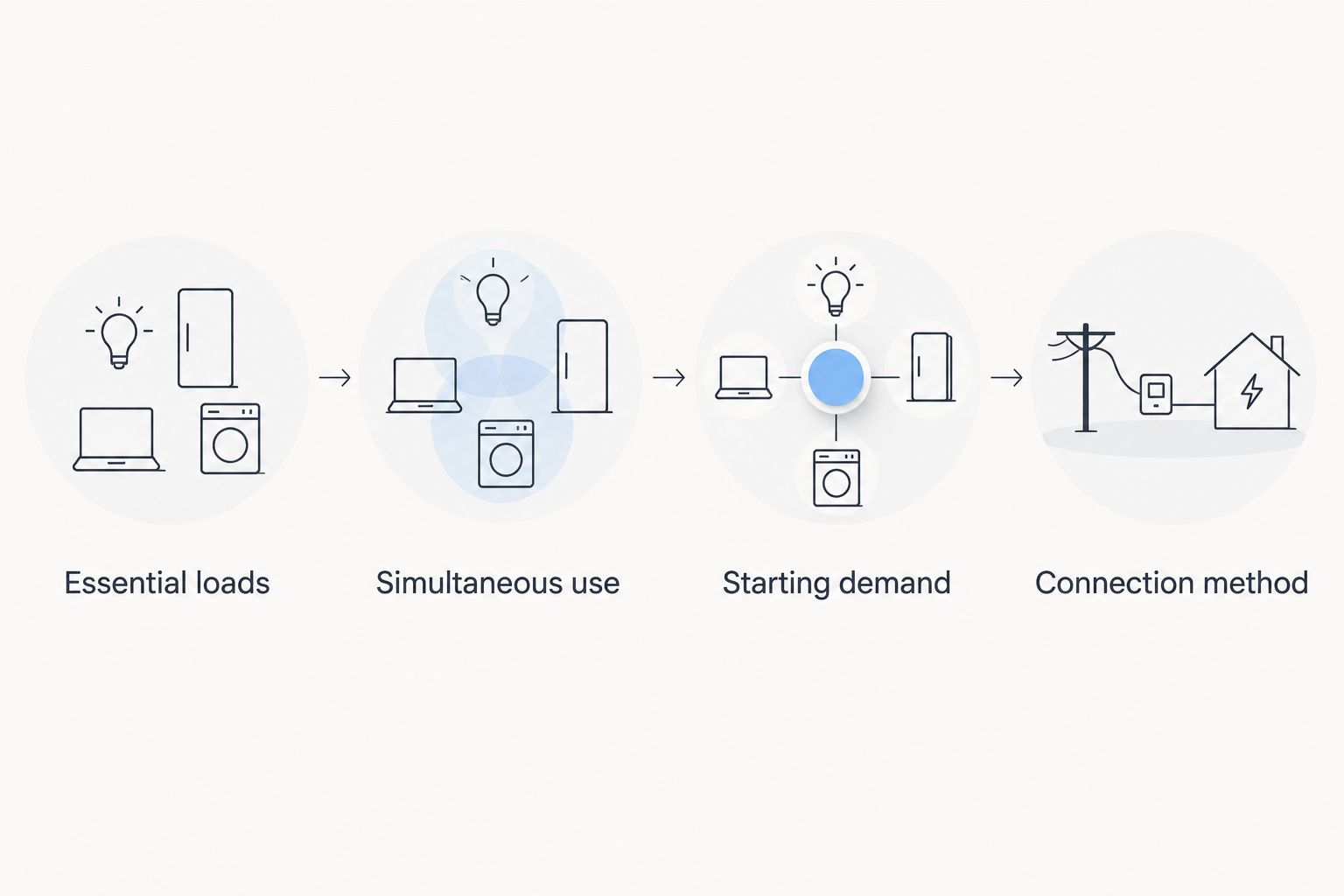
Write down each appliance or device you want during an outage. Mark which must operate at the same time, then identify which have motors that need extra power to start. This separates a limited essentials plan from a plan that includes larger household equipment.
- Essential loads: List the equipment you will not leave off during an outage.
- Simultaneous use: Decide which items must run together rather than assuming every listed item will.
- Starting demand: Check appliances with motors against the generator's starting-output rating.
- Connection method: Record whether each item will plug in directly or requires a planned home connection.
A 120-volt receptacle does not establish that a generator can supply equipment requiring 240 volts. Check the appliance requirements, the generator's specified output and its receptacles rather than relying on the generator's headline wattage. If central air conditioning is on your list, have its starting demand and proposed connection assessed before making it part of a portable-generator plan.
Make the connection and placement safe
CDC guidance says to operate portable generators outdoors, at least 20 feet from doors, windows and vents, with exhaust directed away from the building. Never run one in a garage, even with the door open. Use working carbon monoxide detectors as another protection, not as permission to move the generator closer.
Keep the generator dry without enclosing it or blocking airflow, and follow the manufacturer's instructions for operating conditions. Do not handle electrical connections while standing in water. Refuel only as the manufacturer's instructions allow; a hot generator is not a place to spill fuel.
If you want to supply household circuits, ask an electrician about the appropriate approved transfer equipment and installation for your home. Never backfeed a household outlet. That shortcut creates an electrical hazard for people in the home and for workers outside it.
For Emerald Coast homeowners considering electrical work alongside 2026 hurricane prep, Advantage HVAC, Plumbing & Electrical provides residential electrical installation and repair services. Explain your intended loads and ask what connection work falls within the proposed scope; do not assume an electrical-service visit includes a generator or transfer equipment.
Discuss your electrical plan
Ask about electrical installation scope before selecting a home generator connection.
How these generator types are ranked
This ranking starts with a homeowner's ability to power defined essentials safely, then weighs fuel flexibility, starting-load demands and connection complexity. Dual-fuel inverter takes the default position because it offers two fuel options without requiring a natural-gas connection. Gasoline inverter follows for a narrower essentials plan; open-frame and tri-fuel choices depend more heavily on verified loads or an approved fuel setup.
These are type-level recommendations, not product test results. Compare specific models using their published ratings and instructions. A model with the wrong output, receptacles or placement requirements does not inherit its category's verdict.
Which portable generator should you choose?
For most households starting a 2026 hurricane plan, choose a dual-fuel inverter generator as the first type to compare, then select a model only after checking its ratings on your intended fuel. Choose a gasoline inverter instead if your smaller essentials list fits its documented capacity. Consider an open-frame model for checked starting loads, or tri-fuel only after the fuel connection is settled.
If your goal is broad household coverage rather than selected essentials, compare portable setups with whole-house generator options for hurricane season. A portable-generator decision should not quietly become a whole-home promise.
FAQ
What's the best portable generator type for Florida hurricanes?
A dual-fuel inverter generator is the best overall type to compare when both gasoline and propane fit your fuel plan. Buy a specific model only after its output and connection options match your essential loads.
Is a dual-fuel inverter better than a gasoline inverter generator?
A dual-fuel inverter is better if having gasoline and propane as fuel options matters to your outage plan. A gasoline inverter is a simpler fit when a smaller essentials list matches its documented output.
Can a portable generator run central air conditioning?
Only a generator and connection setup matched to the air conditioner's starting and running requirements can do that. Have those requirements checked before including central air conditioning in your portable-generator plan.
How far from the house should a portable generator run?
Run it outdoors at least 20 feet from doors, windows and vents, following CDC guidance. Direct the exhaust away from the building and never operate it in a garage.
Can I plug a portable generator into a wall outlet to power my home?
No. Backfeeding a household outlet is unsafe; discuss approved transfer equipment and installation with an electrician if you want to power home circuits.
Does a tri-fuel generator work with any home natural-gas line?
No. A suitable supply and approved connection must be confirmed for the particular generator and property; do not improvise a hookup during an outage.
When should I prepare a generator for Florida hurricane season in 2026?
Finish the load list, fuel plan and outdoor-placement check before hurricane season begins on June 1. The National Hurricane Center identifies November 30 as the season's end.
One last thing
The hardest generator problem can be where it will run, not which type to buy. If you cannot identify a dry outdoor operating location that meets the 20-foot separation in CDC guidance, solve that problem before purchasing any fuel-burning portable generator. Advantage HVAC, Plumbing & Electrical can be a contact for discussing residential electrical-service scope, but no electrical connection makes unsafe generator placement acceptable.